
General News
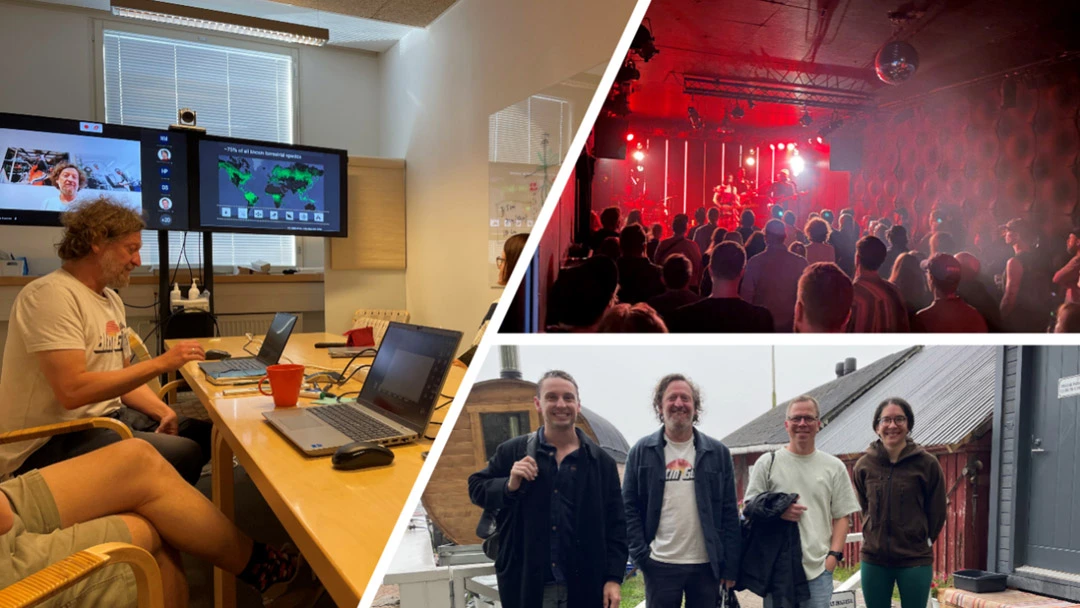
Werner Rammer Visit to Luke to Enhance Biodiversity Modelling in SafeNet
From 26 May to 6 June, the SafeNet Project team was delighted to welcome Werner Rammer to Natural Resources Institute Finland / Luonnonvarakeskus (Luke) to collaborate on improving the iLand model for our case studies.

SafeNet Partners Collaborate in Brașov to Advance Forest Simulations
In June 2025, SafeNet partner Katharina Albrich from Natural Resources Institute Finland / Luonnonvarakeskus (Luke) travelled to Brașov, Romania, to work in person with colleagues from Universitatea Transilvania din Brașov.
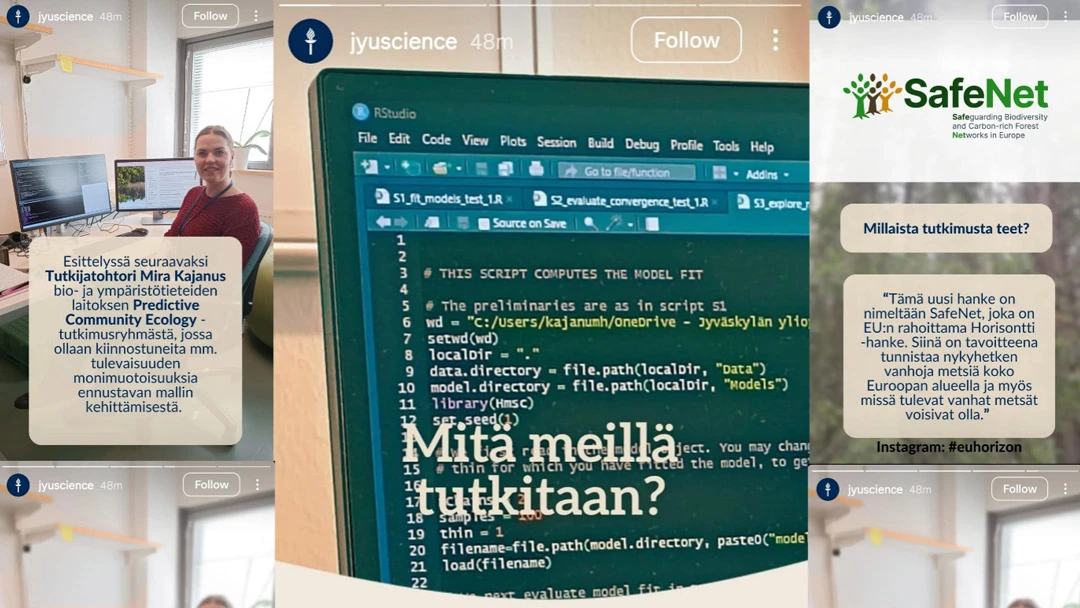
Spotlight on SafeNet Researcher: Mira Kajanus Featured by University of Jyväskylä
In July 2025, the University of Jyväskylä’s Faculty of Mathematics and Science featured Dr Mira Kajanus, a postdoctoral researcher involved in the SafeNet Project, in their Instagram Story series. The feature introduced Mira’s research, her daily work, and her motivation for contributing to forest conservation and biodiversity across Europe.

SafeNet Presentation Wins Innovation Award at Leading Living Lab Conference
We are proud to share that Bence Lukács, researcher in ecological economics at ESSRG, represented SafeNet at the Open Living Lab Days conference in Andorra la Vella (30 September to 03 October 2025), organised by the European Network of Living Labs (ENoLL) and came home with the Best Innovation Presentation award! Bence’s talk, Co-create forest management and policy solutions: Living Labs in the SafeNet project, was part of the Top Contributions session in the Research Track. His presentation stood out among around 50 research talks and was recognised for its originality, clarity, and relevance to the Living Lab community. The presentation, co-developed with Eszter Kelemen, introduced SafeNet’s Living Lab approach to forest governance. It explained how the project is embedding Living Labs in four forest biomes across Europe and establishing a pan-European Policy Lab. Bence highlighted the role of stakeholder engagement in shaping inclusive, evidence-based solutions that link policy goals with real-world forest management. Reflecting on the event, Bence shared: “This is the largest international event where the Living Lab methodology is at the core. It was a great opportunity to share our work and connect with other projects. I found many interesting links and synergies between SafeNet and other […]

SafeNet Poster Travels to the IUCN World Conservation Congress
SafeNet was proudly represented at the IUCN World Conservation Congress in Abu Dhabi (30 September to 03 October 2025), thanks to Marion Karmann (FSC), who brought a project poster to display at the FSC booth. The Congress, held every four years and organised by the International Union for Conservation of Nature (IUCN), is one of the largest global events dedicated to nature conservation and sustainability. Marion used one of the booth walls to showcase the SafeNet poster and shared the project with a wide range of visitors from around the world. Among those who stopped to explore the poster were attendees from Peru, Gibraltar, Tanzania and Ghana. Marion had several engaging conversations about SafeNet and its goals, sparking interest and curiosity among researchers and conservation professionals. Thank you to Marion for bringing SafeNet into this vibrant international space and for helping spread the word about our work!

New BiodivClim briefs show how biodiversity boosts climate resilience!
Biodiversa+ has released a new series of three Issue Briefs from the BiodivClim programme, highlighting how biodiversity can strengthen Europe’s soils, forests, and landscapes against climate change. Drawing on the latest results from 12 pan-European research projects, the briefs offer actionable insights for policymakers, land managers, and researchers working to deliver the European Green Deal. Topics include: The role of soil biodiversity in food production, climate mitigation, and ecosystem restoration Why mixed-species forests and smart financial incentives are key to long-term resilience How Nature-based Solutions, from perennial crops to Arctic community practices, can support adaptation across diverse landscapes A clear message runs through all three briefs: resilience is local. One-size-fits-all approaches are falling short. Effective solutions must be tailored to ecological and social contexts, supported by smart policies, and co-developed with the communities who manage Europe’s land. The briefs are available in English, French, Greek, Portuguese, and German, and can be explored here: https://www.biodiversa.eu/2025/10/30/biodivclim-issue-briefs/.

EC Study Highlights Urgent Need for Better Forest Biodiversity Monitoring
A recent news from the European Commission highlights that Europe still lacks the biodiversity data needed to understand the true state of its forests. Although long-term monitoring programmes exist, the study shows that they remain uneven and often too limited to give a complete picture of species richness and composition across the continent. Researchers assessed six forest types and six species groups across 2,000 locations and found that many taxa, especially saproxylic beetles, vascular plants and fungi, are significantly undersampled. Even better-known groups, such as birds, require more systematic monitoring to provide reliable information. The authors conclude that Europe needs a much more coordinated and extensive effort before biodiversity trends in forests can be understood with confidence. Read the article here This finding is highly relevant to SafeNet, as the project aims to strengthen the evidence base needed for forest conservation in Europe. SafeNet contributes by improving the monitoring and mapping of ecologically valuable and carbon-rich forests and by generating clearer information on how forest ecosystems are changing under growing environmental pressures. By supporting more coherent and comparable biodiversity data across countries and forest types, SafeNet helps address some of the most significant gaps identified in the European Commission’s analysis. […]
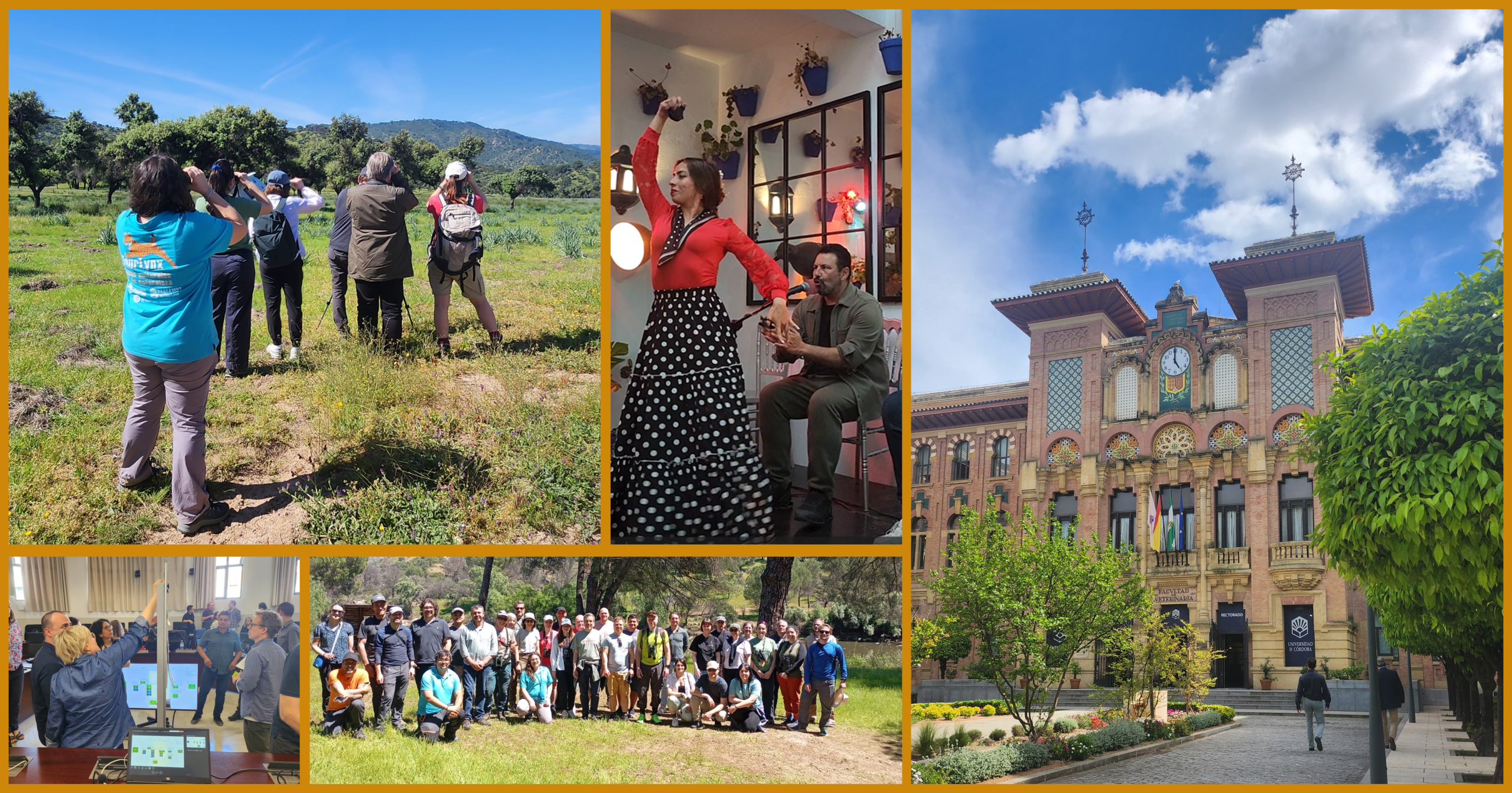
From meetings to mountains visit: the SafeNet partners in Cordoba
In mid‑April, SafeNet partners came together in Cordoba, Spain, for the project’s annual in‑person consortium meeting, graciously hosted by the University of Córdoba. After months of online calls, it was genuinely refreshing for partners from across Europe to meet face to face, catch up properly, and exchange ideas in person, all while enjoying the spring sunshine in the city of flamenco. The meeting took place over two full days at the University of Córdoba, followed by a field visit to one of SafeNet’s Spanish case study areas in the Sierra Morena. The first part of the meeting was dedicated to taking stock of what the project has achieved in its first year and looking ahead to the work still to come. Partners shared updates on activities such as mapping carbon stored in European forests, exploring possible future land use paths, including forest expansion, and developing models to better understand how different forest management choices may influence biodiversity and ecosystem services over time. These discussions helped bring together detailed scientific work with real landscapes and practical conservation challenges. Other sessions focused on how forest management options can be developed together with local actors and then tested through landscape models, helping the […]